Do you drink enough water throughout the day? Do you drink more around exercise?
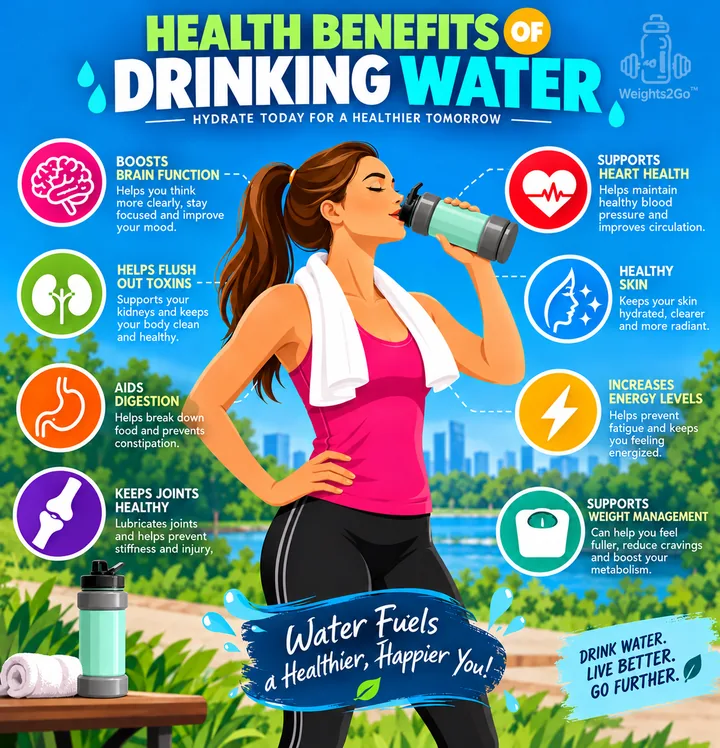
Water is essential for life. It’s the largest single component of the human body, it’s involved in almost every process that keeps us functioning normally. It helps transport nutrients, supports circulation, regulates body temperature, and allows our cells and tissues, to function properly.
How Much Water Do We Need?
There isn’t one magic number that applies to everyone.
Our fluid requirements can vary depending on factors such as body size, activity levels, temperature and humidity, how much we sweat, and what we eat and drink, throughout the day.
The U.S. National Academies of Sciences, Engineering, and Medicine gives an Adequate Intake for total water of approximately 3.7 litres per day for men and 2.7 litres for women. Importantly, these figures include water from food and other beverages — not just the water you drink from a bottle or glass. People who are physically active or exposed to hot environments will generally need more.
So rather than trying to hit an identical number every day, it makes more sense to consider your individual circumstances.
What Happens When We Exercise?
When we exercise, our bodies produce heat. We lose fluid through sweating and breathing, and the harder and longer we exercise, particularly in hot or humid conditions, the greater our potential fluid losses can be.
When we’re dehydrated, our bodies have to work harder to maintain normal physiological function. Fluid loss can affect cardiovascular strain, temperature regulation and how hard exercise feels.
Research suggests that dehydration can also affect exercise performance, particularly during endurance exercise in hot conditions. However, the effect isn’t as simple as saying that a specific percentage of dehydration automatically causes the same performance drop in everyone. Exercise type, duration and environment all matter.
Does Dehydration Make Exercise Feel Harder?
Yes, it can.
Research examining perceived exertion during endurance exercise has found that exercise-induced dehydration can increase how hard exercise feels.
Feeling tired during exercise, doesn’t automatically mean, you’re dehydrated. There are plenty of other reasons we can feel fatigued, including insufficient sleep, inadequate nutrition, exercising at too high an intensity, or simply, doing more than our bodies are accustomed to.
If you’re exercising and begin to feel unusually thirsty, tired, dizzy or unwell, pay attention to those signals, and stop exercising. Take a rest, in shade if you can, and have some water.
Hydration and Body Temperature
One of the most important reasons we sweat during exercise is to cool our bodies.
As our body temperature rises, sweat reaches the skin and evaporates, helping heat to escape. If we lose a lot of fluid, and don’t replace it, maintaining fluid balance and temperature regulation becomes more difficult, particularly in hot environments.
This is one reason hydration is particularly important when exercising outdoors during warmer weather.
Before, During and After Exercise
There isn’t one hydration strategy that is perfect for everyone.
For shorter and less intense exercise, simply having access to water and drinking according to thirst may be perfectly adequate for many people.
For longer-duration exercise, particularly in hot conditions or when you’re sweating heavily, paying more attention to fluid intake becomes increasingly important. Replacing fluids after exercise can also help your body to return towards normal hydration levels.
Research has found that fluid replacement can improve continuous exercise performance following dehydration, with the greatest benefits seen when exercise lasts longer or takes place in hotter conditions.
More isn’t necessarily better.
Drinking excessive amounts of water, particularly during prolonged exercise, can cause the sodium concentration in your blood to fall dangerously low. This condition is known as exercise-associated hyponatremia.
The goal isn’t to force yourself to drink enormous amounts of water. It’s to replace the fluid you’re actually losing.
Can Urine Colour Tell Us If We’re Hydrated?
Urine colour can provide a useful clue.
Generally, darker urine can be associated with more concentrated urine, while paler urine can be associated with better hydration.
However, urine colour isn’t a perfect hydration test. Vitamins, supplements, medications, foods and other factors can change its colour. Think of it as one possible clue, rather than a precise measurement of how much water you need.
Your thirst, urine output and colour, exercise duration, weather and how much you’re sweating can all provide useful information when considered together.
So, How Much Should You Drink When Exercising?
This is where I think it’s important not to overcomplicate things.
There is no single amount of water that every person should drink before, during and after exercise.
Your requirements can depend on:
- How long you’re exercising
- How hard you’re exercising
- Your body size
- How much you sweat
- The temperature and humidity
- Whether you’re exercising indoors or outdoors
- What you’ve eaten and drunk throughout the day
- Whether you were already dehydrated before exercising
For a shorter, moderate workout, drinking according to thirst may be all you need.
For longer exercise sessions, particularly in hot weather, you may need to pay considerably more attention to your fluid intake. Remember, we’re all different. Someone who sweats heavily may have very different fluid requirements from someone who barely sweats.
Water Doesn’t Have to Be Boring!
If you don’t particularly enjoy plain water, there are lots of simple ways to make it more appealing.
Try adding:
- Lemon or lime
- Cucumber
- Berries
- Mint
- Plenty of ice
- A small amount of fruit juice
Personally, I love chilled water after exercising, especially after being outdoors. After my morning walk or hike, I’ll often have a large glass of water. If I’m still thirsty, I may have another glass or two, before enjoying a chilled peach-flavoured iced tea.
This Is Where Weights2Go Comes In…
If you enjoy exercising outdoors, whether that’s walking, hiking, running or another form of exercise or activity, having water with you, is essential.
This is one of the reasons I created Weights2Go Weighted Sports Bottles.
Our weighted sports bottles are designed to combine two sports drinking bottles with four removable weights, allowing you to carry your water, while also incorporating, resistance training into your activity.
Rather than carrying a separate water bottle in one hand while, while trying to manage dumbbells as well, Weights2Go is designed to combine hydration and resistance training in one convenient product.
As we say at Weights2Go …………. Hydrate. Strengthen. Go.
The great thing about walking, running, hiking or any fitness activity outdoors, is that you don’t necessarily need, a gym membership to get moving.
You can simply step outside, take your water with you, and enjoy being active.
The Takeaway
Staying hydrated doesn’t mean forcing yourself to drink as much water as possible.
It means giving your body the fluid it needs, while considering your activity, your environment and your individual needs.
For a gentle walk on a cool day, your requirements will be very different (less) from someone running for an hour in hot, humid conditions.
So, drink regularly, pay attention to your body’s signals, and remember that, hydration is just one part of looking after yourself!
Disclaimer
The information provided in this article, and on this website, is for general educational and informational purposes only. It is not intended to replace medical advice, diagnosis or treatment from a qualified healthcare professional.
If you experience rapid or unexplained weight loss or weight gain, persistent abdominal swelling or bloating, significant changes in your bowel habits, abdominal pain, or any other symptoms that concern you, please speak to your doctor.
If you are new to exercise, have an existing medical condition, are taking medication, or are unsure whether a particular exercise, diet or weight-loss approach, is suitable for you, speak to your doctor or another appropriately qualified healthcare professional, before starting or changing, your exercise programme.
Research is continually evolving, and individual responses to diet, exercise, sleep and weight loss, can vary considerably.
Research & Further Reading
- Dietary Reference Intakes for Water, Potassium, Sodium, Chloride, and Sulfate — National Academies of Sciences, Engineering, and Medicine, 2005. Provides the commonly cited Adequate Intake figures for total water and explains that water from food and other beverages contributes to total intake.
- The Importance of Good Hydration for Work and Exercise Performance — Shirreffs, 2005. A review examining hydration, exercise performance and environmental temperature.
- Dehydration: Physiology, Assessment, and Performance Effects — Cheuvront & Kenefick, 2012. Reviews the physiological effects of dehydration and how its impact on performance varies according to exercise and environmental conditions.
- The Effect of Fluid Intake Following Dehydration on Subsequent Athletic and Cognitive Performance: A Systematic Review and Meta-analysis — McCartney et al., 2017. A systematic review and meta-analysis of 64 trials examining the effects of fluid replacement following dehydration.
- Dehydration Impairs Cognitive Performance: A Meta-analysis — Wittbrodt & Millard-Stafford, 2018. Examines the relationship between dehydration and cognitive performance.
Impact of Dehydration on Perceived Exertion During Endurance Exercise: A Systematic Review With Meta-analysis — Lorenzo et al., 2022. Examines whether dehydration makes endurance exercise feel harder.